


 Pressure
- Temperature

Bimetallic
1 product
TC
0 products
Gas filled
4 products
Thermowell
8 products
Ceramic Protection Tube
2 products
Replaceable measuring inserts
7 products
Non-Replaceable Measuring Inserts
3 products
Surface and Machinery Sensors
35 products
For Food and Pharmaceutical Industry
7 products
For HVAC Applications
9 products
For Acids, Alkalis, and Salts
4 products
Flameproof and Intrinsically Safe
5 products
Transmitters and Accessories
14 products
Accessories
5 products - Flowmeter

Electro Magnetic
0 products
Vortex
4 products
Swirl
0 products
Ultrasonic
2 products
Positive Displacement
6 products
Variable Area
9 products
Differential Pressure
9 products
Gas Turbine
0 products
Flap
3 products
Side Glass
0 products
Thermal gas
1 product - Level
Radar
5 products
Ultrasonic
0 products
Capacitance
13 products
Conductivity
0 products
Magnetic
1 product
Float
0 products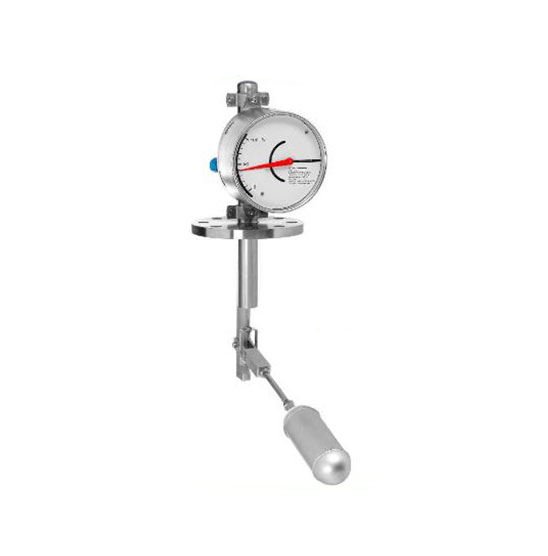
Buoyancy
0 products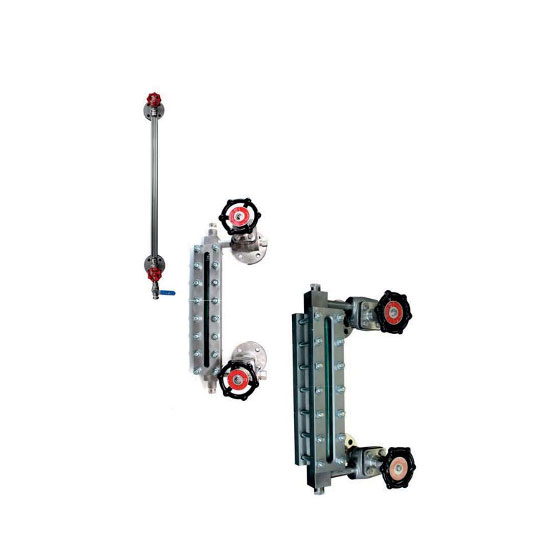
Tube
4 products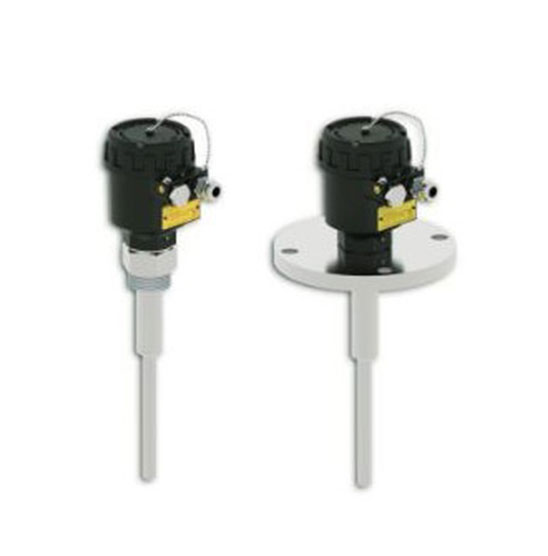
Vibrating Rod
3 products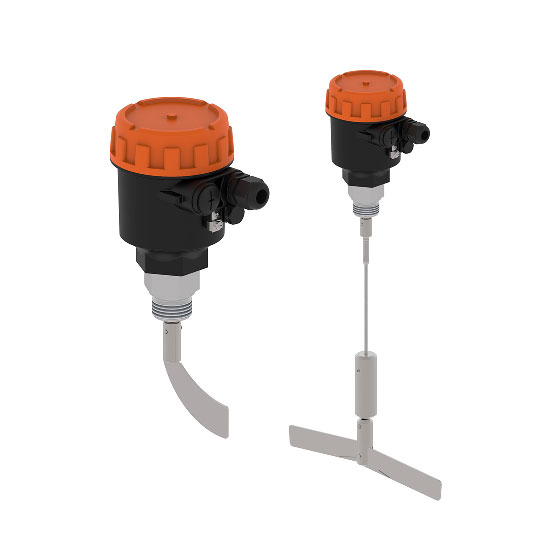
Rotary Paddle
2 products
Level Switches
27 products - Analytical
Process Systems
30 products
Concentration
10 products
Density
10 products
Chlorine
0 products Conductivity
5 products PH
0 products Redox
0 products - Calibration Devices
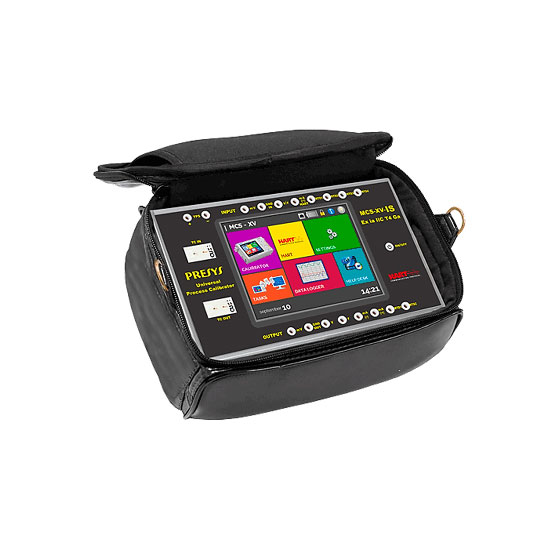
Multi Function Calibrators
2 products
Pressure Calibrators
3 products
Temperature Calibrators
4 products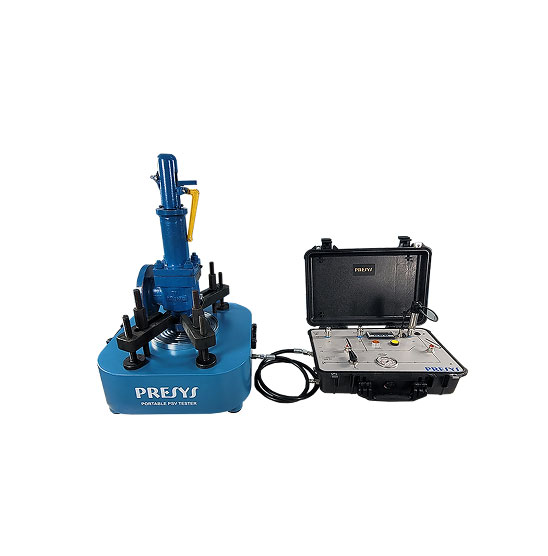
Valve Testing
1 product - All products









 HSPV
HSPV


Uncategorized
Measuring airflow in coating spray booths and its exhaust outlet

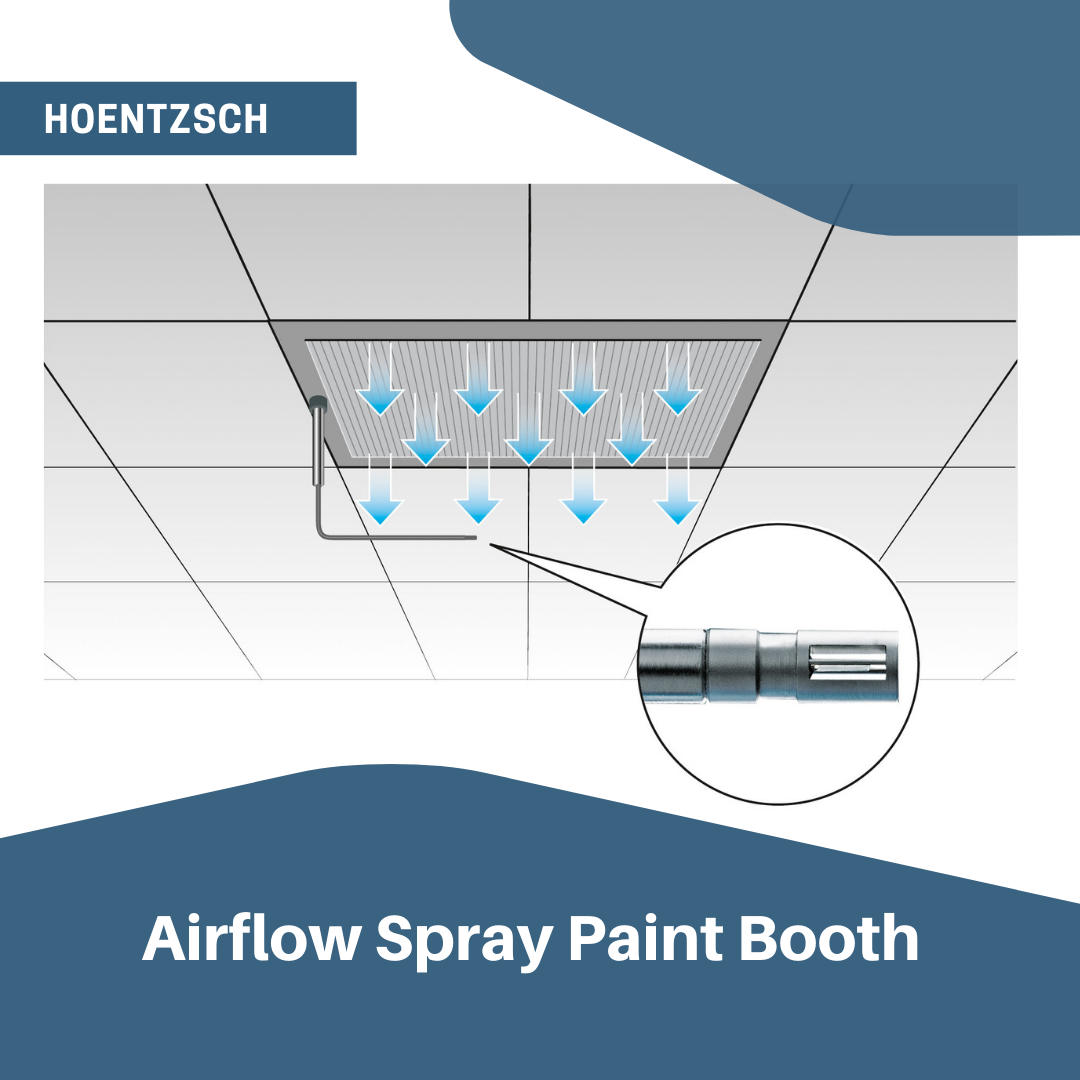
In coating facilities for beverage cans, cars, truck bodies, etc. air flow velocity needs to be measured accurately at different points:
- laminar flow has to be ensured in the spray booth to get optimal results and
- the exhaust air in the coating booth and the chamber kiln have to be monitored for safety and environmental reasons.
Application
To achieve optimal coating results there have to be specific room conditions. Temperature, humidity and air flow have to be kept withing a strict range. Besides room conditions, environmental protection in coating and spraying also plays a major role. The resulting overspray in the spray booth is diverted by a regulated, downward-directed air flow. This air flow is collected, measured and processed. The exhaust air of the chamber kilns is also measured. That way environmental pollution is reduced. It also ensures that no harmful or flammable concentrations of solvents arise.
Laminar flow
On the one hand laminar flow in a spray booth is measured. Which is a very slow, homogenous flow that typically flows from the ceiling / plenum to the floor.
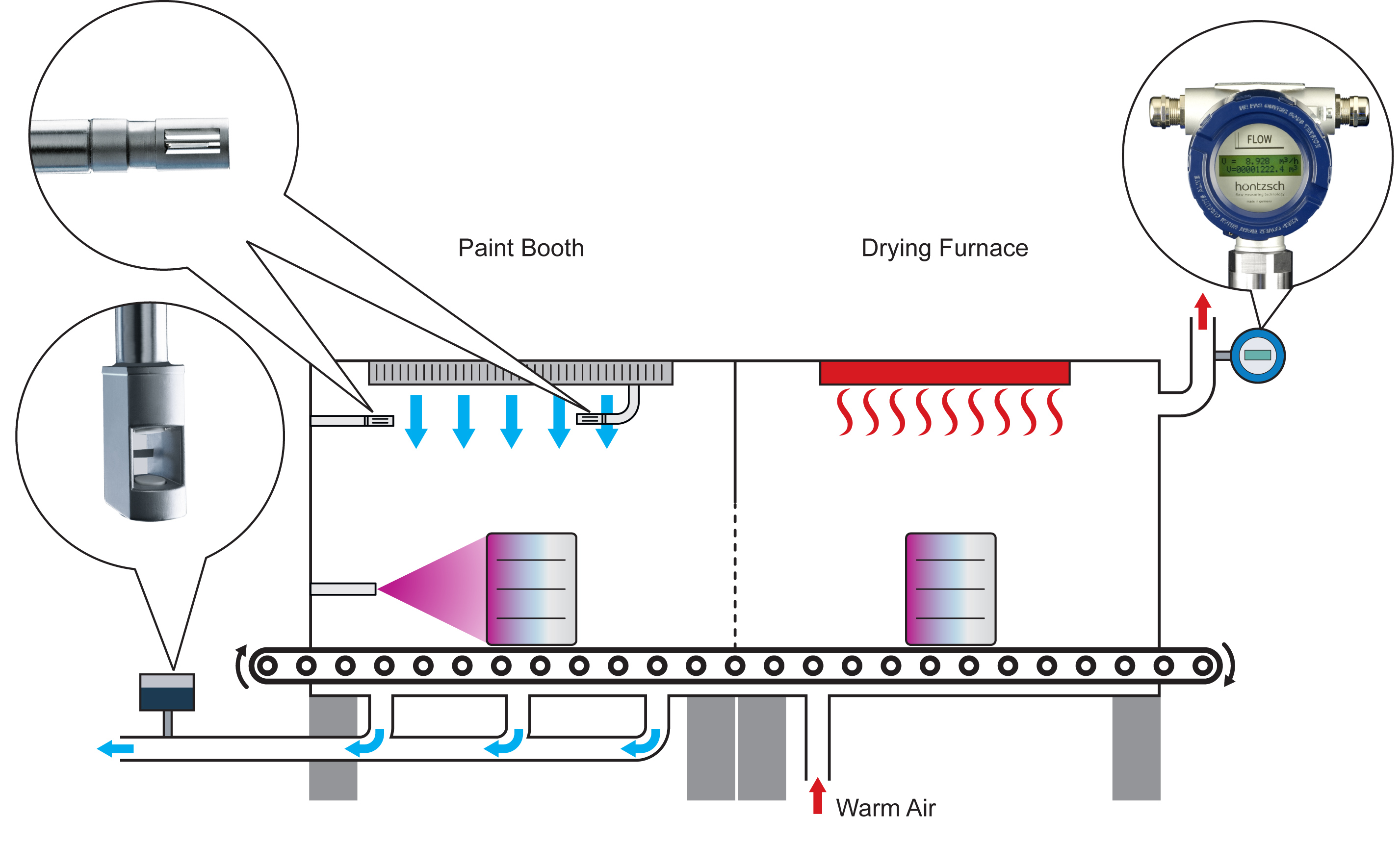
It helps divert the overspray. Overspray is the part of the paint that doesn’t reach the product, but floats loosely in the room. Despite electrostatic charge and other technical measures during the coating process there’s still a considerable amount of overspray even in modern coating booths.
With the help of laminar flow, hazardous substances are diverted also. This is especially important in manual processes for employee protection. At the same time it also aids in reducing the environmental damage through the painting process. Laminar flow has to be slow to avoid any turbulence or negatively affect the paint process. To ensure homogeneity there should be measurements at different points of the plenum. Exact values are defined by he VDMA and the DIN EN 16985:2019-04 „spray booths for organic coating material – safety requirements; German version EN 16985:2018“. According to these regulations, operation of the application system must only be possible when the technical solution is in operating mode and the requirements for airflow are fulfilled.
Exhaust air
There’s also another flow measurement of collected exhaust gases that exit the coating booth and are then fed to downstream processing. These exhaust air flows are usually lightly loaded with pollutants. That’s why they’re usually concentrated in order to make the treatment process more economical. Gases can be cleaned in thermal afterburning. Due to air enriched with overspray the vortex sensor comes to use.
Process data
Measuring task:
Flow velocity for process regulation
Measuring point:
In the area of laminar flow below the ceiling filter (plenum)
In the exhaust duct
Measuring range:
Laminar: 0.25 … 0.5 m/s
Exhaust air: 15 … 25 m/s
Process pressure:
Atmospheric
Process environment:
20 … 200 °C
Recommended Probes:
- Laminar Flow: Thermal Probe TA10C
- Exhaust Gases: Vortex VA40 ZG8