Cooling of Wort

Cooling of Wort

download pdf datasheet

5 People watching this product now!
SKU: Wort Cooler Categories: , ,
Description

Description

Application

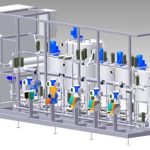
The Wort Cooler reduces the temperature of wort to the required pitching temperature. In breweries, cooling is typically performed after wort boiling and trub separation.
Description

For wort cooling a plate heat exchanger is used. The cooling process is done in one or two stages. In a single-stage process cold brewing water is used as the single cooling medium. The brewing water can be cooled to approx. 1 °C in a separate chiller operated with glycol, ammonia or brine. The wort enters the plate heat exchanger at about 100 °C. Due to the interaction of the hot wort and the cold brewing water in the heat exchanger, the temperature of the wort is lowered to approx. 2 – 3 °C while the temperature of the brewing water is raised to about 80 °C. The brewing water is used for the next brew, so the energy is returned to the brewing process. In a two-stage process, the hot wort is first cooled by brewing water to approx. 20 °C and then secondly by glycol, ammonia or brine to the pitching temperature. The warm brewing water can also be used for the next brew.
  • High energy efficiency with brewing water as cooling medium
  • Customized modular design with a standard PLC
  • Skid mounted for easy installation and start-up
  • Hygienic execution and full CIP capability

Typical Technical Data

Capacity 10 – 2.000 hl
Material according to requirements (1.4301/AISI 304, 1.4404/AISI 316L, …)
Options different automation levels; remote maintenance access; booster pump; wort cooler; yeast pitching
About Centec

Products & Features

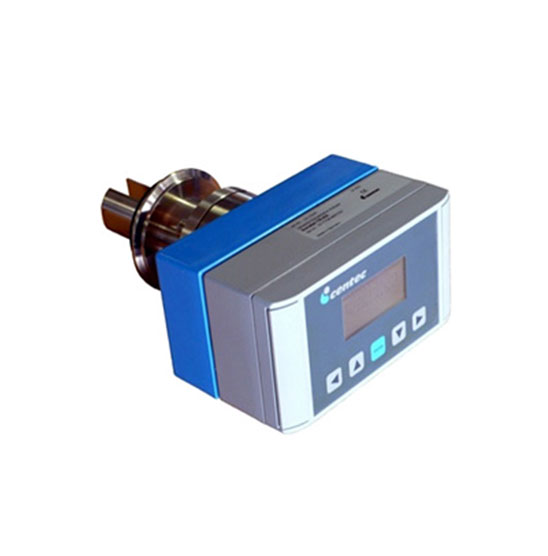
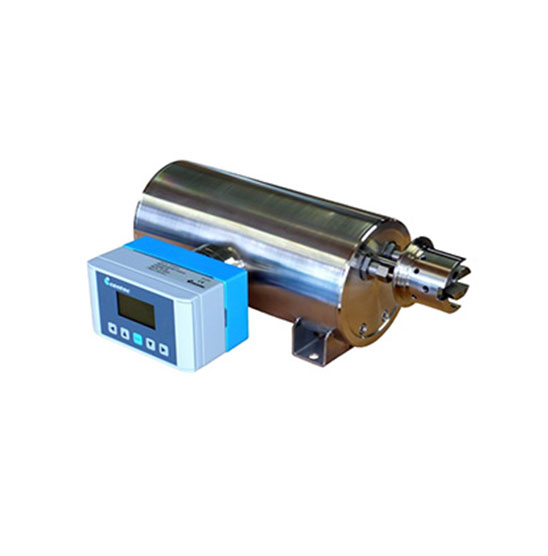
Centec Germany is a premier manufacturer of high-precision process sensors and fully automated skid-mounted systems for the beverage, food, pharmaceutical, and chemical industries. With 50 years of experience, they specialize in in-house development and ISO-certified manufacturing, providing tailored, turnkey solutions for liquids processing and quality measurement.

Sensors:

  • Density Measurement (RHOTEC)
  • Sound Velocity (SONATEC)
  • Combined Analysis (COMBITEC) for complex, multi-component liquids
  • O2 (Oxytrans)
  • CO2 (Carbotec)

Automated frame-mounted Process Skids:
These modular systems integrate their high-precision sensors directly into the production line, allowing for "plug-and-play" installation and seamless integration into existing plant automation for 

  • Water Treatment & Purification
  • Beverage & Liquid Processing
  • Cleaning & Sterilization

Key Benefits

  • Single Source Responsibility: Engineering, manufacturing, installation, and commissioning from one provider, reducing project complexity.
  • Superior Process Accuracy: Inline measurement of density, sound velocity, O2 and CO2 concentration ensures maximum product quality.
  • Increased Efficiency & Lower Costs: Optimized designs minimize space requirements and operational expenses.
  • Global Support: A worldwide network ensures fast service and technical support.