



 Pressure

Bourdon Tube
7 products
Boiler
2 productsChemical
3 products
Phenolic
1 product
Differential
7 products
Capsule
3 products
Test Pressure Gauge
5 products
Contact
4 products
Diaphragm
3 products
Diaphragm Seal
1 product
Digital
2 products
Pressure Transmitter
10 products
Pressure Switch
5 products
Load and Force
11 products
Accessories
15 products- Temperature
RTD
5 products
Bimetallic
2 products
Gas Filled
2 products
Non-Replaceable Inserts
3 products
Replaceable Inserts
4 products
Ceramic Protection
7 products
Mineral Insulated
4 products
Flameproof and Intrinsically Safe
7 products
Surface and Machinery
30 products
Food and Pharma
7 products
HVAC
9 products
Acids, Alkalis, Salts
4 products
Temperature Switch
1 product
Thermowell
16 products
Indicator, Controller
8 products
Accessories
9 products
Humidity
7 productsThermocouple
50 products
Cable Sensors
38 productsHead Sensors
9 products
High Temperature
6 products
Temperature Transmitter
6 products - Flow

Electro Magnetic
2 products
Vortex
3 products
Swirl
1 product
Ultrasonic
7 products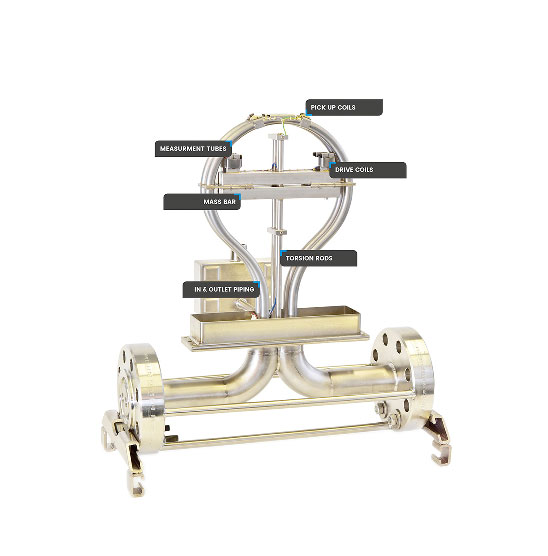
Coriolis Mass Flowmeter
28 products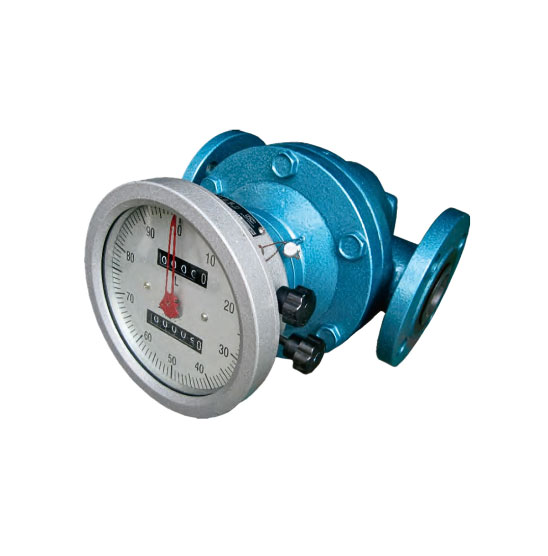
Positive Displacement
6 products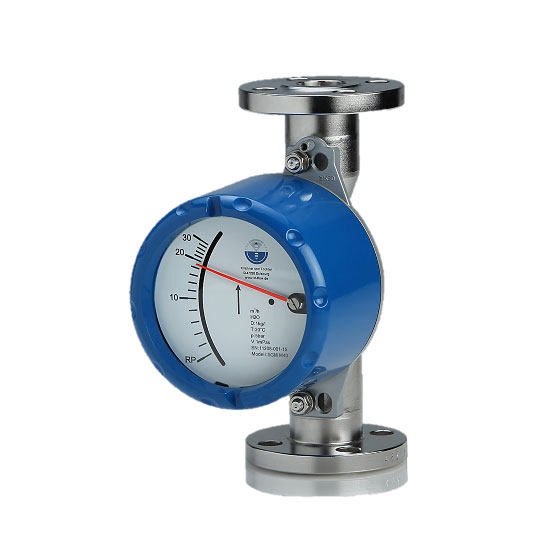
Variable Area
1 product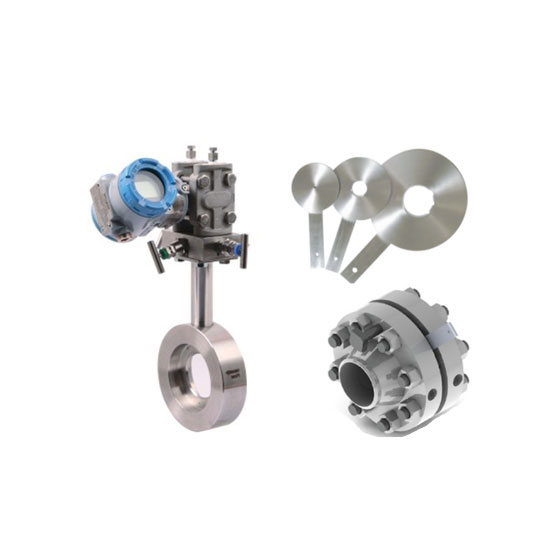
Differential Pressure
7 products
Turbine
4 products
Flap
1 product
Side Glass
1 product
Thermal gas
5 products
Air Flow/Quality
11 products
Flow Switch
9 products
Flow Computer
3 products
Flow Accessories
2 products
Dosing/Batching
6 products - Level
Radar
3 products
Ultrasonic
1 product
Capacitance
7 products
Conductivity
4 products
Magnetic
1 product
Float/Buoyancy
7 products
Level Indicator
3 products
Vibrating Rod
3 products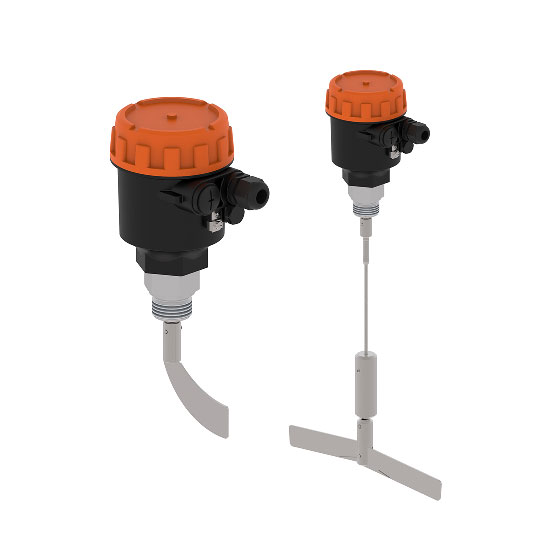
Rotary Paddle
2 products
Hydrostatic
2 products
Optical
1 product
Level Switches
11 products - Calibration Devices
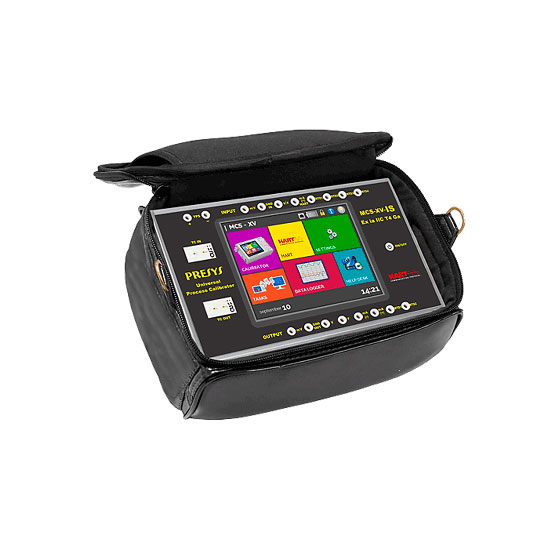
Multi Function Calibrators
2 products
Pressure Calibrators
4 products
Temperature Calibrators
6 products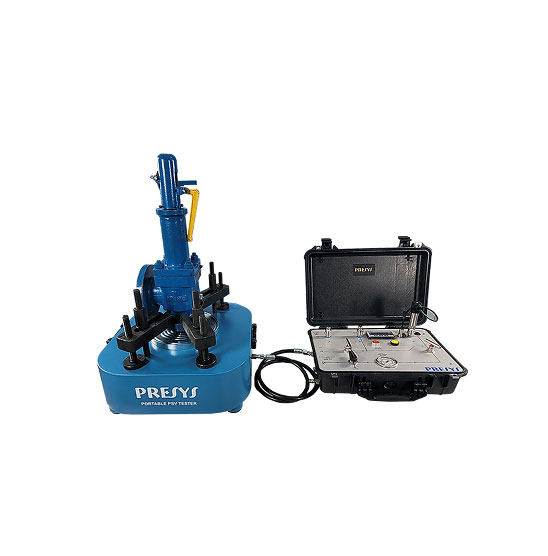
Valve Testing
1 product
Calibration Software
1 product  Valves
Actuator
1 product
Ball Valves
2 products
Butterfly Valves
3 products
Gate Valves
2 products
Globe Valves
3 products- Analytical Sensors

Water Quality Sensors
16 products
Process Systems
11 products
Density and Concentration
12 products
Analytical Controller
2 products - Process Systems







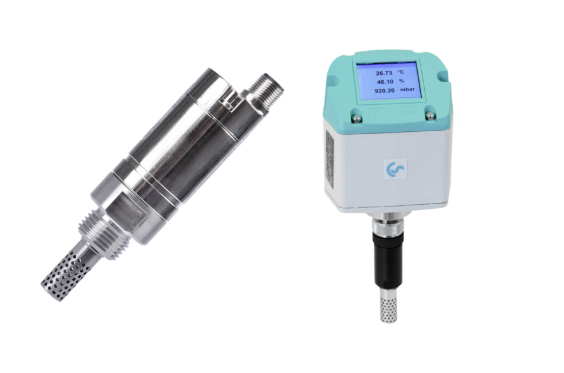
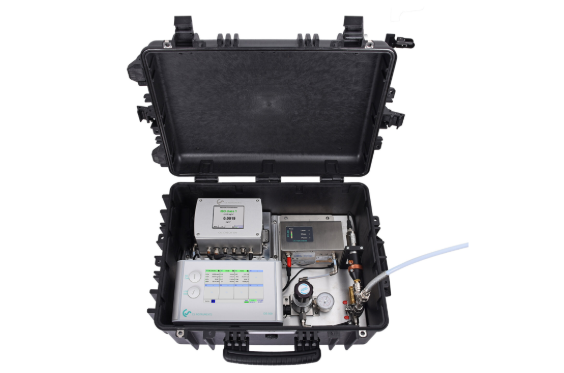

Compressed Air Quality Monitoring
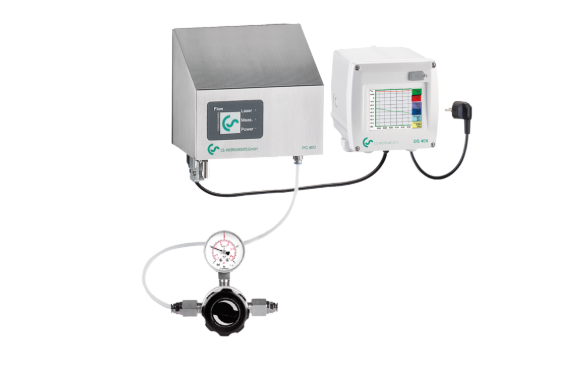
CS Instruments Compressed Air Quality Monitoring Solutions represent a comprehensive ecosystem of stationary and mobile instrumentation engineered to analyze, track, and validate compliance with strict ISO 8573-1 purity classifications. By combining multi-sensor networks into singular diagnostic interfaces, these systems provide real-time tracking for the three critical industrial contaminants: solid aerosol particles, moisture vapor, and vaporous residual oil.
Description
Description
CS Instruments Compressed Air Humidity Monitoring – FA 510, FL 510, IAC 500 and IAC 510
CS Instruments offers a range of sensors for monitoring moisture, humidity, and environmental conditions in compressed air systems. These instruments help operators maintain air quality, protect equipment, and improve process reliability.
Moisture monitoring is particularly important in compressed air installations. Excess moisture can cause corrosion, damage pneumatic equipment, contaminate products, and affect sensitive manufacturing processes. Therefore, selecting the correct measurement technology is essential.
The FA 510, FL 510, IAC 500, and IAC 510 provide different measurement functions for compressed air systems, industrial gases, compressor intake air, and controlled environments.
1. CS Instruments FA 510 – Dew Point Sensor
The FA 510 Dew Point Sensor measures residual moisture in compressed air and gases. It is designed for monitoring the pressure dew point downstream of refrigeration dryers, membrane dryers, and adsorption dryers.
Moreover, its condensation-resistant design supports reliable long-term monitoring. The sensor provides a 4–20 mA analogue output and a Modbus-RTU interface, allowing integration with industrial monitoring and control systems.
Key Specifications
- Measurement: Pressure dew point and moisture-related parameters
- Measuring range: Configuration-dependent; variants cover very low dew-point temperatures for different dryer applications
- Accuracy: Range-dependent; refer to the selected model’s datasheet
- Output: 4–20 mA and Modbus-RTU (RS-485)
- Optional measurement: Integrated pressure sensor, depending on configuration
- Protection rating: IP66
- Applications: Compressed air dryers, industrial gases, and residual-moisture monitoring
Working Principle
The sensor detects moisture in the gas and determines the pressure dew point. The pressure dew point indicates the temperature at which water vapour begins to condense at the operating pressure. Consequently, operators can assess dryer performance and identify moisture problems before they affect downstream equipment.
Main Advantages
- Continuous residual-moisture monitoring
- Condensation-resistant sensor technology
- Suitable for low-dew-point applications
- Analogue and digital communication options
- Supports monitoring of compressed air and compatible industrial gases
2. CS Instruments FL 510 – Industrial Humidity Transmitter
The FL 510 Industrial Humidity Transmitter measures relative humidity and temperature in gases. It uses a capacitive humidity sensor designed to deliver stable and accurate measurements over time.
In addition, the transmitter can calculate humidity-related parameters such as absolute humidity, moisture content, and water-vapour concentration. This makes it suitable for industrial processes where moisture content must be monitored continuously.
Key Specifications
- Measurement: Relative humidity and temperature
- Relative humidity range: 0–100% RH
- Humidity accuracy: Approximately ±1.8% RH under specified conditions; up to ±2% RH across the stated range
- Temperature measurement: Available; range and accuracy depend on the specification
- Analogue outputs: Two freely configurable 4–20 mA outputs
- Digital interface: Modbus-RTU (RS-485)
- Supply voltage: 24 VDC nominal; 10–36 VDC operating range
- Protection rating: IP66
- Applications: Gas pipelines, storage tanks, inert-gas systems, laboratories, and industrial gas processes
Working Principle
The FL 510 uses a capacitive humidity-sensing element. As moisture in the gas changes, the electrical properties of the sensing element change. The transmitter processes this response to calculate relative humidity and combines it with temperature measurement to determine additional humidity values.
The measured variables are then transmitted through the configured analogue outputs or Modbus interface.
Main Advantages
- Continuous online humidity monitoring
- Measurement of relative humidity and temperature
- Calculation of additional moisture parameters
- Two configurable analogue outputs
- Digital communication for integration with automation systems
- Suitable for compatible non-corrosive gases
3. CS Instruments IAC 500 – Ambient Condition Sensor
The IAC 500 Ambient Condition Sensor monitors the environmental conditions surrounding compressor installations and other controlled spaces. It measures absolute pressure, room temperature, and relative humidity in one instrument.
These parameters help operators understand the conditions of the air entering a compressor. Since intake-air conditions influence compressor performance and delivered air volume, monitoring them can support system optimisation.
Key Specifications
- Measurement: Absolute pressure, ambient temperature, and relative humidity
- Relative humidity range: 5–95% RH
- Humidity accuracy: Approximately ±3% RH
- Temperature range: −20°C to +60°C
- Absolute pressure range: 300–1100 hPa
- Communication: Configuration-dependent options include Modbus-RTU, Ethernet, or M-Bus
- Outputs: Configuration-dependent analogue outputs and alarm relays
- Protection rating: IP65
- Applications: Compressor intake-air monitoring, cold rooms, storage areas, and clean rooms
Working Principle
The IAC 500 continuously measures ambient humidity, temperature, and absolute pressure. The sensor processes these measurements and makes the configured values available through its communication interface or optional analogue outputs.
As a result, operators can monitor environmental changes that influence compressor intake conditions and the performance of humidity-sensitive processes.
Main Advantages
- Three environmental measurements in one instrument
- Monitoring of compressor intake-air conditions
- Communication options for building and industrial automation
- Optional analogue outputs and alarm functions
- Suitable for controlled environments and monitoring applications
4. CS Instruments IAC 510 – Ambient Condition Sensor with Configurable Analogue Outputs
The IAC 510 measures absolute pressure, ambient temperature, and relative humidity, similar to the IAC 500. However, it features two freely configurable 4–20 mA analogue outputs, which can be assigned to measured variables such as humidity and temperature.
Furthermore, its Modbus-RTU interface supports digital communication with compatible monitoring systems.
Key Specifications
- Measurement: Absolute pressure, ambient temperature, and relative humidity
- Analogue outputs: Two freely configurable 4–20 mA outputs
- Digital interface: Modbus-RTU (RS-485)
- Installation: Ambient or room-air monitoring
- Applications: Compressor intake-air monitoring, storage rooms, cold rooms, and clean rooms
Working Principle
The IAC 510 measures the surrounding air’s humidity, temperature, and absolute pressure. Users can configure the analogue outputs to transmit selected variables to a PLC, DCS, or other compatible controller. Meanwhile, the Modbus-RTU interface provides access to supported measurement values.
Main Advantages
- Three-in-one ambient monitoring
- Two configurable 4–20 mA outputs
- Modbus-RTU communication
- Helps monitor changing compressor intake conditions
- Suitable for environmental monitoring in industrial facilities
Comparison Table
| Model | Primary Measurement | Typical Application | Main Interface |
|---|---|---|---|
| FA 510 | Pressure dew point | Compressed air dryers and residual moisture | 4–20 mA, Modbus-RTU |
| FL 510 | Relative humidity and temperature in gases | Gas pipelines and industrial processes | Two 4–20 mA outputs, Modbus-RTU |
| IAC 500 | Ambient humidity, temperature, and absolute pressure | Compressor intake air and room monitoring | Configuration-dependent |
| IAC 510 | Ambient humidity, temperature, and absolute pressure | Compressor intake air and room monitoring | Two 4–20 mA outputs, Modbus-RTU |
How to Select the Right Sensor
Choose the sensor according to where and what you need to measure.
- Choose the FA 510 when you need to monitor pressure dew point and residual moisture after a compressed-air dryer.
- Choose the FL 510 when you need to measure relative humidity and temperature directly in a compatible gas stream.
- Choose the IAC 500 when you need to monitor ambient conditions around a compressor or in a controlled room, with communication and output options selected for your system.
- Choose the IAC 510 when you need ambient monitoring with two configurable 4–20 mA outputs and Modbus-RTU communication.
Important: Pressure dew point and relative humidity are different measurements. The FA 510 is intended for dew-point monitoring in pressurised gas, while the FL 510 measures relative humidity in gases. The IAC models measure ambient room conditions rather than directly measuring moisture inside a compressed-air pipeline.
Conclusion
CS Instruments provides different solutions for monitoring moisture in compressed air and industrial environments. The FA 510 helps assess dryer performance, the FL 510 measures humidity in gas streams, and the IAC 500 and IAC 510 monitor environmental conditions that influence compressor operation.
By selecting the correct sensor, operators can improve moisture monitoring, support product quality, and protect equipment from moisture-related problems.
About CS Instruments
CS Instruments, from Germany, makes measuring instruments for compressed air and gases, and Schmierer SEA offers nine of them from Shah Alam: flow meters for consumption and compressor capacity, the LD500 and LD510 ultrasonic leak detectors with camera, and dew point, particle and oil vapour sensors for air quality. Our team helps you select the instrument and set it up.
Which CS Instruments product for which job
| Job | Product | Stated figures |
|---|---|---|
| Consumption in dry air | VA 500, 520, 550, 570 | Thermal mass flow, no moving parts; up to 40 bar (selected VA 520) or 50 bar (selected VA 550) |
| Wet air at the compressor outlet | VD 500 | -30 to +180 °C, up to 30 bar, DN 20 to DN 600 |
| Compressor capacity and billing | CMM 500 | ±0.5% of reading from 20 to 100% of maximum flow |
| Flow without cutting the pipe | VC600 | Clamp-on ultrasonic, pipes 25 to 90 mm outside diameter |
| Finding leaks | LD500 and LD510 | Leak rate and annual cost estimate per leak; LD510 adds a sensor input |
| Dew point and humidity | FA 510, FL 510 | Pressure dew point after the dryer; 0 to 100% RH |
| Particles | PC400 | From 0.1 µm or 0.3 µm, three size channels |
| Oil vapour | Oil Check500 | 0.001 to 5 mg/m³ at 3 to 9 bar |
| Air quality as one system | Compressed Air Quality Monitoring | Particle, moisture and oil sensors on one interface |
Where to start
- High energy bill: measure consumption with a VA sensor, then find the leaks with the LD500.
- Compressor performance in doubt: the CMM 500 is built as a reference meter for free air delivery.
- Air quality requirements: ISO 8573-1 classes air by particles, water and oil; the PC400, FA 510 and Oil Check500 measure each.
All CS Instruments products and the compact gas flow sensors we offer are on the compressed air flow meter page. Tell us the pipe size, pressure and what you need to know, and send an enquiry.
Related products

Massflow Sensor RHM015 small size 0.0015 – 0.6 kg/min
In stock
SKU:
RHM015
The RHM015 is perfect for extremely low flow applications where stability and accuracy are a must. With an application range starting at a few grams a minute, the RHM015L fits R&D and small pilot requirements.
PDF datasheet

Massflow Sensor RHM02 small size 0.02 – 2 kg/min
In stock
SKU:
RHM02
The RHM02 is available with a wide selection of wetted materials and the highest pressure and temperature ratings in the market. It is suitable for all low flow applications where high accuracy is a must.
PDF datasheet

Massflow Sensor RHM08 small size 0.3 – 50 kg/min
In stock
SKU:
RHM08
The Model RHM08 is perfect for small scale production with continuous low flow and small batch dispensing requirements. With a variety of construction styles, the RHM08 is ideal for countless flow applications.
PDF datasheet

Massflow Sensor RHM15 middle size 1 – 200 kg/min
In stock
SKU:
RHM15
The RHM15 is an all-purpose meter suitable for liquid processing plants. A wide application flow range capability allows for commonality of installation across numerous lines – a real benefit to owners and operators.
PDF datasheet