


 Pressure

Bourdon Tube
7 products
Boiler
2 productsChemical
3 products
Phenolic
1 product
Differential
7 products
Capsule
3 products
Test Pressure Gauge
5 products
Contact
4 products
Diaphragm
3 products
Diaphragm Seal
1 product
Digital
2 products
Pressure Transmitter
10 products
Pressure Switch
5 products
Load and Force
11 products
Accessories
15 products- Temperature
RTD
5 products
Bimetallic
2 products
Gas Filled
2 products
Non-Replaceable Inserts
3 products
Replaceable Inserts
4 products
Ceramic Protection
7 products
Mineral Insulated
4 products
Flameproof and Intrinsically Safe
7 products
Surface and Machinery
30 products
Food and Pharma
7 products
HVAC
9 products
Acids, Alkalis, Salts
4 products
Temperature Switch
1 product
Thermowell
16 products
Indicator, Controller
8 products
Accessories
9 products
Humidity
7 productsThermocouple
50 products
Cable Sensors
38 productsHead Sensors
9 products
High Temperature
6 products
Temperature Transmitter
6 products - Flow

Electro Magnetic
2 products
Vortex
3 products
Swirl
1 product
Ultrasonic
7 products
Coriolis Mass Flowmeter
28 products
Positive Displacement
6 products
Variable Area
1 product
Differential Pressure
7 products
Turbine
4 products
Flap
1 product
Side Glass
1 product
Thermal gas
5 products
Air Flow/Quality
11 products
Flow Switch
9 products
Flow Computer
3 products
Flow Accessories
2 products
Dosing/Batching
6 products - Level
Radar
3 products
Ultrasonic
1 product
Capacitance
7 products
Conductivity
4 products
Magnetic
1 product
Float/Buoyancy
7 products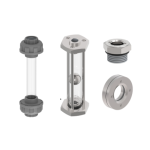
Level Indicator
3 products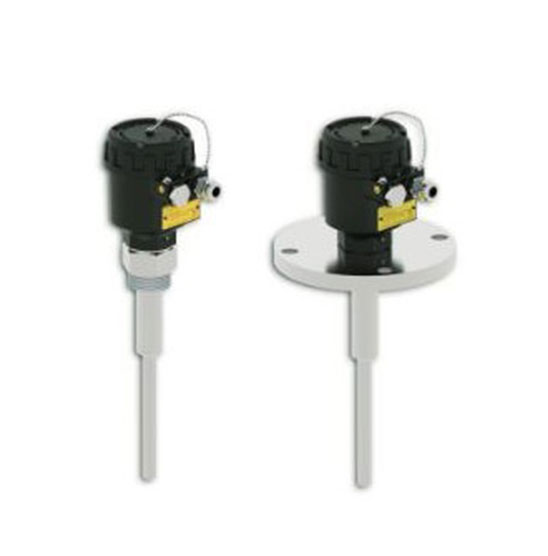
Vibrating Rod
3 products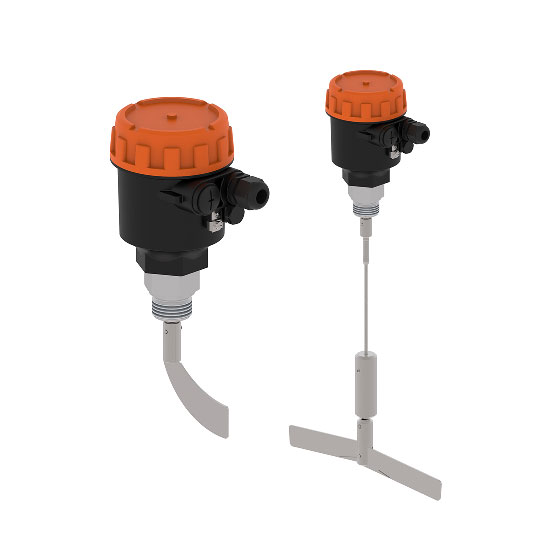
Rotary Paddle
2 products
Hydrostatic
2 products
Optical
1 product
Level Switches
11 products - Calibration Devices
Multi Function Calibrators
2 products
Pressure Calibrators
4 products
Temperature Calibrators
6 products
Valve Testing
1 product
Calibration Software
1 product  Valves
Actuator
1 product
Ball Valves
2 products
Butterfly Valves
3 products
Gate Valves
2 products
Globe Valves
3 products- Analytical Sensors

Water Quality Sensors
16 products
Process Systems
11 products
Density and Concentration
12 products
Analytical Controller
2 products - Process Systems






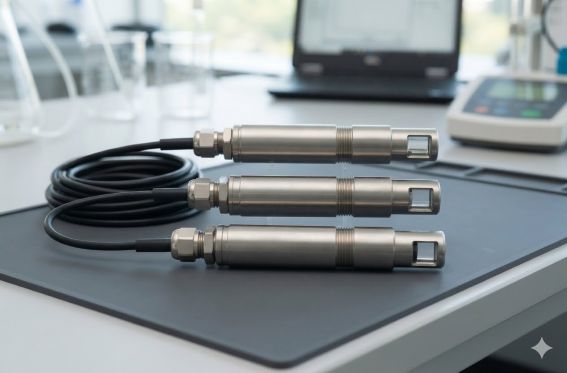
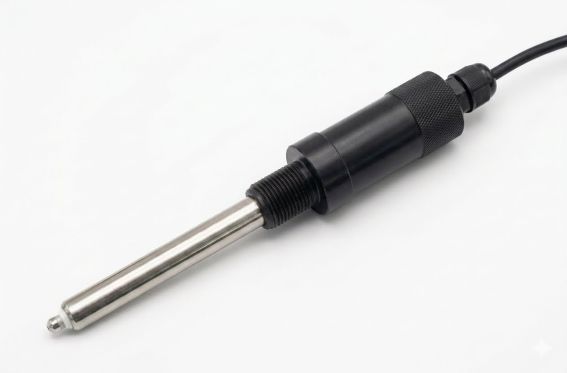

SSEA-FCHLX Free Chlorine Sensor
water quality monitoring with the digital SSEA-FCHLX free chlorine sensor: RS-485 Modbus communication, constant voltage precision, and zero reagent usage. It utilizes an advanced constant voltage method to deliver precise, real-time measurements of residual chlorine from 0–20 mg/L. Equipped with a built-in isolation design, in integrated temperature sensor with compensation and an RS-485 Modbus-RTU interface, this digital sensor ensures strong anti-interference performance and high reliability for drinking water, industrial processes, and swimming pool monitoring without requiring chemical reagents or frequent replacement parts.
Description
Description
Free chlorine is the portion of chlorine in water available for disinfection. It helps control harmful microorganisms, including bacteria and viruses, and is essential for maintaining water quality in drinking water systems, swimming pools, and other water treatment processes.
The Schmierer SEA Free Chlorine Sensor uses an electrochemical measurement method to monitor free chlorine concentration. A controlled negative pulse voltage is applied between the polarized electrode and the reference electrode, enabling free chlorine to participate in an electrochemical reaction at the cathode. This reaction generates a current signal proportional to the free chlorine concentration, allowing the sensor to provide continuous water quality monitoring.
Features
- RS-485 communication interface supporting the MODBUS-RTU protocol and dual-channel communication.
- Isolated power supply and output design to improve electrical safety.
- Built-in protection circuitry to enhance resistance to electrical interference in demanding environments.
- User-friendly communication protocol with additional electrode diagnostic information for improved monitoring and maintenance.
- Built-in calibration parameters to simplify on-site commissioning and secondary calibration.
Working Principle
The free chlorine sensor uses an advanced electrochemical measurement method. A controlled negative pulse voltage is applied between the polarized electrode and the reference electrode, promoting an electrochemical reduction reaction involving free chlorine at the cathode.
This reaction produces an electrical current that is proportional to the free chlorine concentration within the sensor’s specified operating range. The sensor’s internal electronics collect and process the current signal to calculate the free chlorine level, enabling continuous monitoring of residual chlorine in water treatment applications.
Applications
- Drinking Water Treatment: Monitoring free chlorine in drinking water distribution networks, secondary pumping stations, and water intake facilities.
- Industrial Wastewater: Monitoring disinfection processes and supporting wastewater discharge compliance checks.
- Municipal Water Infrastructure: Providing continuous online monitoring of treated water and wastewater treatment plant outlet streams.
- Multi-Parameter Water Quality Stations: Integrating free chlorine measurement with other water quality parameters, such as pH, turbidity, and conductivity.
Related products

CARBOTEC TR-PT Inline CO2 Transmitter
In stock
SKU:
Carbotec TR-PT
Achieve absolute precision in your continuous carbonation loops and finished product quality audits. Breweries and soft drink production plants deploy the Centec CARBOTEC TR-PT Inline Sensor to secure automated carbon dioxide tracking. Because this high-performance instrument isolates and expands sample volumes to capture exact pressure-temperature equilibrium points, it removes measurement drift caused by background process fluctuations completely. Consequently, your production line guarantees uniform fizz, perfect flavor profiles, and zero material loss during active process cycles.

SSEA-CODX Chemical Oxygen Demand Sensor
In stock
SKU:
SSEACODX
The SSEACODX self cleaning COD Sensor delivers reagent-free, real-time tracking of organic pollutants in water. Utilizing advanced UVC LED absorption at 254 nm, it features automatic turbidity compensation and an integrated self-cleaning wiper to ensure stable, low-maintenance online operation across municipal and industrial wastewater applications.
This proven technology provides reliable and accurate analysis of organic pollutants for water quality monitoring at low cost and low maintenance. With rugged design, and integrated turbidity compensation, it is an excellent solution for continuous monitoring of source water, surface water, municipal and industrial wastewater.
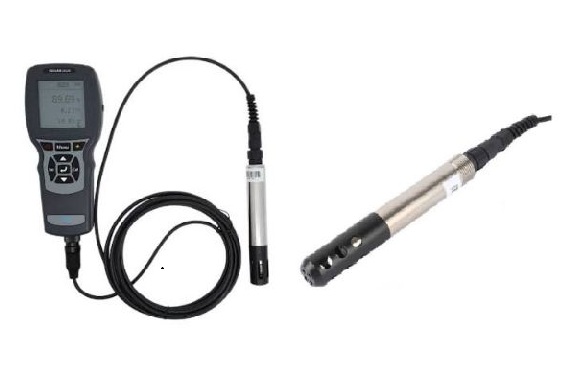
SSEA-DOX Dissolved Oxygen Sensor
In stock
SKU:
SSEADOX
Schmierer SSEA-DOX optical dissolved oxygen sensors utilize cutting-edge luminescence quenching technology to provide stable, real-time water quality measurements. Built with rugged housings and optional self-cleaning wipers, these digital RS-485 sensors eliminate the need for membranes, electrolytes, or frequent calibrations, ensuring low-maintenance operation across aquaculture, industrial wastewater, and environmental water testing.

SSEA-PHX digital pH Sensor
In stock
SKU:
SSEA-PHX
The SSEA-PHX digital pH sensor adopts a robust industrial-grade online electrode and an integrated temperature sensor for automatic temperature compensation, rendering it highly suitable for long-term online monitoring applications. It features an RS485 communication interface and supports the standard MODBUS protocol, enabling networking and system integration without the need for an external controller. It is extensively utilized in various fields, including water quality treatment, hydrological monitoring, wastewater management, swimming pools, industrial control systems, and biological application.