Description
Models and Configurations
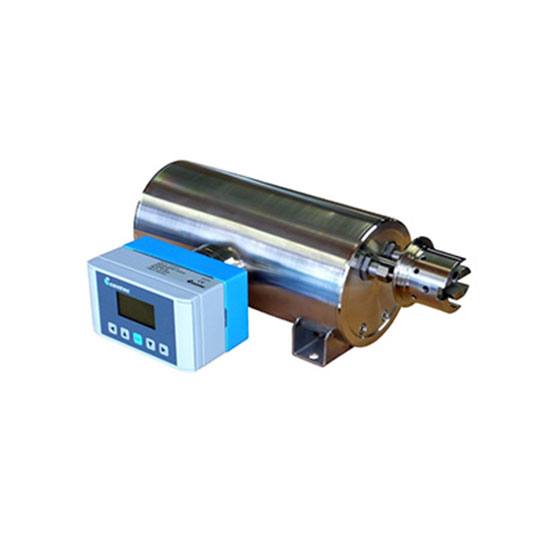
The deltawaveCoG product range includes configurations for different installation requirements.
- deltawaveCoG-F: Fixed installation for continuous gas flow monitoring in industrial pipelines.
- deltawaveCoG-P: A product designation listed in the manufacturer’s documentation. Confirm the exact configuration and intended application with systec Controls before ordering.
- Standard clamp-on configuration: External ultrasonic transducers mounted on compatible pipes without contacting the gas.
- Hazardous-area configuration: Optional approved electronics and transducers are available for suitable classified areas.
The appropriate configuration depends on pipe diameter, wall thickness, gas composition, operating conditions and hazardous-area requirements.
Key Specifications
- Manufacturer: systec Controls
- Model: deltawaveCoG
- Measurement principle: Ultrasonic transit-time difference
- Measurement type: Non-invasive clamp-on gas flow measurement
- Compatible pipe sizes: DN25–DN700, depending on the transducer
- Pipe materials: Carbon steel, stainless steel and compatible plastics
- Flow velocity range: −30 to +30 m/s
- Compatible media: Air and natural gas; other gases available on request
- Gas temperature range: −40°C to +150°C, subject to the installed transducer’s limits
- Pressure and temperature compensation: Integrated calculation with fixed-value inputs, 4–20 mA inputs or PT100 temperature sensors
- Temperature inputs: Two three-wire PT100 inputs
- Analog outputs: Two 4–20 mA outputs
- Additional outputs: Relay, transistor digital output and pulse output
- Communication: Optional RS485 and Modbus
- Power supply: 230 V AC or 18–36 V DC, depending on configuration
- Protection rating: IP65
- Installation arrangement: Z-mode transducer mounting
- Data management: Integrated data logger, USB connection and supporting analysis software
- Hazardous-area options: Available with suitable approved components for specified applications
Note: The actual measuring range and performance depend on pipe dimensions, wall material, gas properties and installation conditions. Verify the exact ratings and approvals against the current manufacturer datasheet.
Working Principle
The deltawaveCoG uses the ultrasonic transit-time difference method to determine gas flow.
Step 1 – Install the transducers. The ultrasonic sensors are clamped onto the outside of the pipe. The pipeline remains intact, and the sensors do not contact the gas.
Step 2 – Transmit ultrasonic signals. The transducers send sound pulses through the pipe wall and gas along a defined acoustic path.
Step 3 – Measure transit times. Sound travels at different effective speeds depending on whether its path is with or against the gas flow. The meter measures the difference between these transit times.
Step 4 – Calculate flow velocity. The electronics process the measured time difference to determine the gas velocity. The configured pipe dimensions and measurement parameters are used to calculate the flow rate.
Step 5 – Compensate for operating conditions. Pressure and temperature measurements or configured values allow the meter to calculate standard-volume flow and other compensated quantities, depending on the configuration.
Step 6 – Transmit and record data. The system displays flow information and can send signals to a PLC, DCS, SCADA platform or energy monitoring system.
Consequently, the deltawaveCoG measures gas flow without introducing an obstruction into the pipeline.
Advantages
- Non-invasive installation: Sensors mount externally without cutting the pipe.
- Zero additional pressure loss: The meter does not introduce an internal measuring element into the gas stream.
- No moving parts: Reduces mechanical wear and routine maintenance.
- Leak-free measurement installation: No new process-wetted joints are required for the clamp-on sensors.
- Compensated flow calculations: Pressure and temperature inputs support corrected-volume and mass-flow calculations.
- Flexible pipe compatibility: Suitable configurations support metal and compatible plastic pipelines.
- Industrial integration: Analog, pulse and relay outputs support monitoring and control.
- Data logging: Stored measurement data can be transferred for analysis.
- Hazardous-area options: Compatible approved components can support specified classified installations.
Applications
The systec Controls deltawaveCoG is suitable for:
- Compressed air monitoring and consumption optimization
- Natural gas flow measurement
- Industrial gas distribution
- Gas consumption monitoring at pressure-reducing stations
- Power generation and combustion systems
- Chemical and petrochemical processing
- LNG-related gas measurement, subject to application suitability
- Industrial energy management
- Gas flow monitoring in existing pipelines
- Applications where intrusive meter installation is difficult
Installation and Selection
First, identify the gas composition and operating conditions. Next, confirm the pipe’s outside diameter, wall thickness and material. These details are essential because ultrasonic signal transmission depends on the pipe and gas characteristics.
Then, select compatible transducers and the correct mounting arrangement. The manufacturer specifies Z-mode mounting for the deltawaveCoG configuration. Follow the installation manual for sensor spacing, alignment, coupling and signal optimization.
In addition, decide whether the application needs pressure and temperature compensation, 4–20 mA outputs or Modbus communication. For hazardous areas, confirm that the complete installation—including electronics, transducers and accessories—meets the applicable approval requirements.
Conclusion
The systec Controls deltawaveCoG Clamp-on Gas Flow Meter provides non-invasive ultrasonic flow measurement for industrial gas pipelines. Its external sensors preserve pipeline integrity, while integrated compensation supports more useful flow and consumption data.
Moreover, its flexible inputs, outputs, data logging and optional hazardous-area components make it suitable for a wide range of gas monitoring applications. Correct sensor selection and installation are essential for reliable results.




 Pressure


















 Valves