Description
Models and Configurations
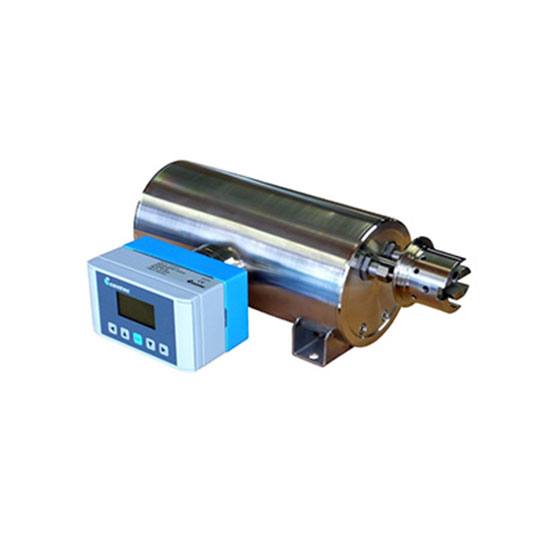
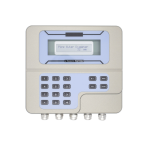
The deltawaveC-P system includes a portable transmitter and interchangeable ultrasonic transducers to suit different pipe sizes and operating conditions.
- F40 transducers: 4 MHz sensors for smaller pipes, typically DN10–DN100, depending on the mounting arrangement.
- F10 transducers: 1 MHz sensors for medium-sized pipes, typically DN32–DN400.
- F05 transducers: 500 kHz sensors for larger pipes, typically DN200–DN6000.
- HT10 high-temperature transducers: Designed for selected applications with fluid temperatures up to 380°C.
- Optional Pt100 sensors: Measure fluid temperatures for heat-quantity calculations.
- Mounting options: V-mode, W-mode and Z-mode, selected according to pipe dimensions, material and signal conditions.
The appropriate transducer depends on the pipe diameter, wall thickness, material, fluid temperature and acoustic properties.
Key Specifications
- Manufacturer: systec Controls
- Model: deltawaveC-P
- Measurement principle: Ultrasonic transit-time difference
- Measurement type: Portable, non-invasive clamp-on flow measurement
- Measured media: Sound-conducting liquids in full pipes
- Pipe diameter range: DN10–DN6000, depending on the transducer
- Flow velocity range: Approximately −30 to +30 m/s
- Fluid temperature: Typically −40°C to +150°C with suitable standard transducers
- High-temperature option: Up to 380°C with compatible HT10 sensors
- Accuracy: From approximately ±0.5% of measured value plus a velocity-dependent component under specified high-accuracy conditions
- Optional heat measurement: Heat rate and accumulated heat quantity
- Temperature inputs: Two three-wire Pt100 inputs, optional
- Analog outputs: Two 4–20 mA outputs, active or passive
- Additional outputs: Pulse output and relay
- Data storage: Removable microSD card, typically 4 GB or larger
- Data transfer: USB connection with CSV data export
- Power supply: Rechargeable battery and external power adapter
- Battery operation: Approximately 22 hours under specified conditions
- Display: Backlit graphical LCD
- Transducer protection: IP68 for compatible standard transducers; the HT10 has its own specified protection rating
Note: Accuracy depends on the transducer, pipe size, installation, fluid and measurement conditions. Verify the latest datasheet for the selected sensor set.
Working Principle
The deltawaveC-P measures flow using the ultrasonic transit-time difference method.
Step 1 – Mount the sensors. The ultrasonic transducers are attached to the outside of the pipe using the appropriate mounting arrangement and acoustic coupling material.
Step 2 – Transmit ultrasonic signals. The sensors send sound pulses through the pipe wall and liquid. Signals travel both with and against the direction of flow.
Step 3 – Measure transit-time differences. Ultrasound travels faster in the direction of flow and slower against it. The meter measures the difference between the two travel times.
Step 4 – Calculate flow. The electronics use the transit-time difference, configured pipe dimensions and measurement parameters to calculate liquid velocity and volume flow.
Step 5 – Measure heat quantity, if required. Optional Pt100 sensors measure the temperatures needed for thermal-energy calculations. When the system is configured with the appropriate temperature measurements and fluid properties, it can calculate heat transfer and accumulated heat quantity.
Step 6 – Record and export results. The meter displays the measured values and saves data to its memory card. Users can transfer the recorded data to a computer for analysis.
Consequently, the deltawaveC-P allows technicians to verify flow and evaluate system performance without opening the pipeline.
Advantages
- Non-invasive measurement: No pipe cutting, welding or direct fluid contact is required.
- Portable design: Easy to move between different measurement points.
- Reduced process disruption: Measurements can be taken while the system remains operational.
- Wide pipe-size coverage: Interchangeable transducers support small pipes and large industrial pipelines.
- Heat-quantity measurement: Optional temperature sensors support thermal-energy assessments.
- Data logging: Recorded measurements help identify operating patterns and performance changes.
- Flexible outputs: Analog, pulse and relay signals support external monitoring.
- Low maintenance: External sensors avoid wetted moving parts.
- Useful diagnostics: Signal-quality information helps technicians assess the acoustic measurement conditions.
Applications
The systec Controls deltawaveC-P is suitable for:
- Pump performance testing
- Cooling-water flow measurement
- Chilled-water and hot-water systems
- District heating and heat-transfer systems
- HVAC commissioning and optimization
- Water and wastewater treatment
- Industrial process-water monitoring
- Chemical and petrochemical plants
- Flow verification and troubleshooting
- Energy audits and consumption analysis
- Checking installed flow meters against a portable reference
Installation and Selection
First, identify the pipe material, outside diameter, wall thickness and fluid temperature. Then, select a compatible transducer based on the pipe size and acoustic conditions.
Next, prepare the pipe surface and apply the recommended coupling material. Position the sensors using the specified mounting mode and sensor spacing. Correct alignment is essential because poor acoustic coupling can weaken the signal and reduce measurement reliability.
In addition, configure the fluid properties, pipe dimensions, measurement units and logging interval. For heat-quantity measurements, install the optional Pt100 sensors at the required locations.
Finally, check the displayed signal quality and measured values before relying on the results. Pipes containing significant air bubbles, suspended solids or partially filled sections may affect ultrasonic measurement performance.
Conclusion
The systec Controls deltawaveC-P Portable Clamp-on Ultrasonic Flow Meter provides a flexible way to measure liquid flow without interrupting the process. Its interchangeable transducers cover a broad range of pipe sizes, while optional temperature sensors support heat-quantity measurement.
Moreover, its portable design, data logging and diagnostic functions make it particularly useful for commissioning, maintenance, troubleshooting and energy optimization.




 Pressure


















 Valves