



 Pressure

Bourdon Tube
7 products
Boiler
2 productsChemical
3 products
Phenolic
1 product
Differential
7 products
Capsule
3 products
Test Pressure Gauge
5 products
Contact
4 products
Diaphragm
3 products
Diaphragm Seal
1 product
Digital
2 products
Pressure Transmitter
10 products
Pressure Switch
5 products
Load and Force
11 products
Accessories
15 products- Temperature
RTD
5 products
Bimetallic
2 products
Gas Filled
2 products
Non-Replaceable Inserts
3 products
Replaceable Inserts
4 products
Ceramic Protection
7 products
Mineral Insulated
4 products
Flameproof and Intrinsically Safe
7 products
Surface and Machinery
30 products
Food and Pharma
7 products
HVAC
9 products
Acids, Alkalis, Salts
4 products
Temperature Switch
1 product
Thermowell
16 products
Indicator, Controller
8 products
Accessories
9 products
Humidity
7 productsThermocouple
50 products
Cable Sensors
38 productsHead Sensors
9 products
High Temperature
6 products
Temperature Transmitter
6 products - Flow

Electro Magnetic
2 products
Vortex
3 products
Swirl
1 product
Ultrasonic
7 products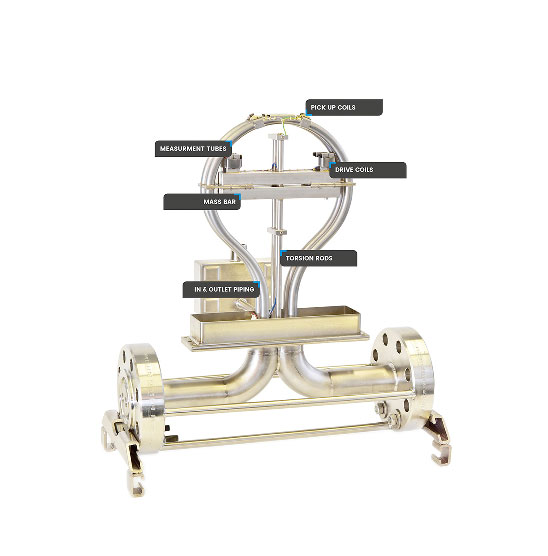
Coriolis Mass Flowmeter
28 products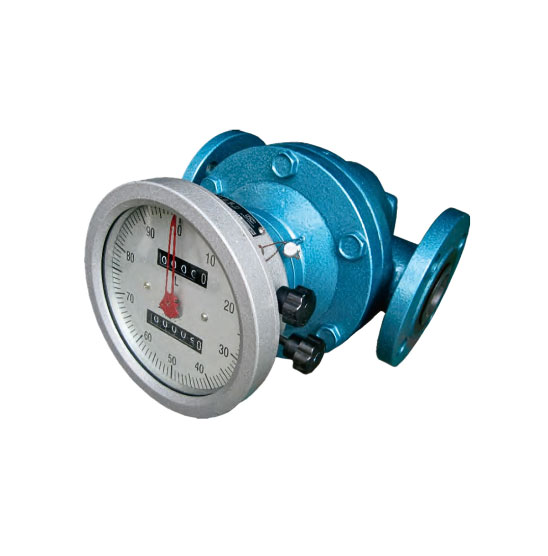
Positive Displacement
6 products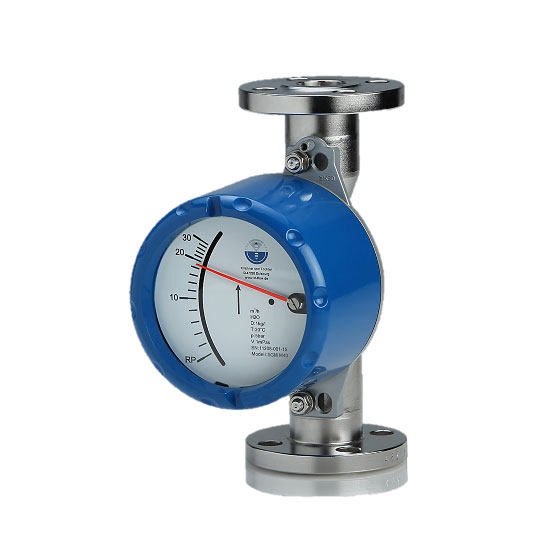
Variable Area
1 product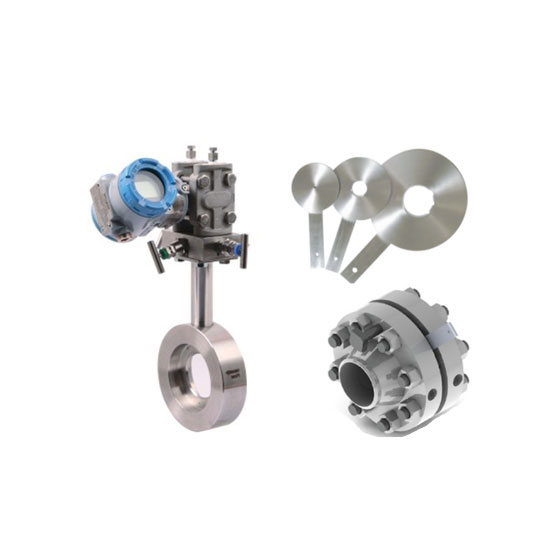
Differential Pressure
7 products
Turbine
4 products
Flap
1 product
Side Glass
1 product
Thermal gas
5 products
Air Flow/Quality
11 products
Flow Switch
9 products
Flow Computer
3 products
Flow Accessories
2 products
Dosing/Batching
6 products - Level
Radar
3 products
Ultrasonic
1 product
Capacitance
7 products
Conductivity
4 products
Magnetic
1 product
Float/Buoyancy
7 products
Level Indicator
3 products
Vibrating Rod
3 products
Rotary Paddle
2 products
Hydrostatic
2 products
Optical
1 product
Level Switches
11 products - Calibration Devices
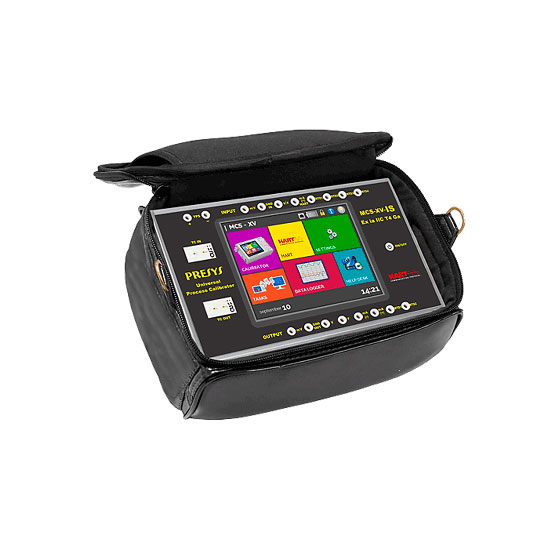
Multi Function Calibrators
2 products
Pressure Calibrators
4 products
Temperature Calibrators
6 products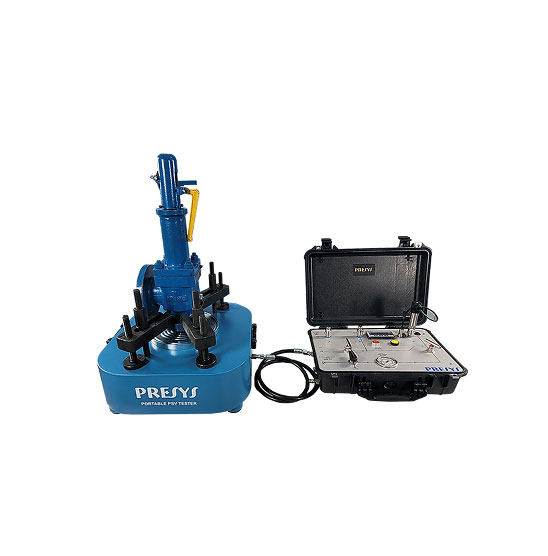
Valve Testing
1 product
Calibration Software
1 product  Valves
Actuator
1 product
Ball Valves
2 products
Butterfly Valves
3 products
Gate Valves
2 products
Globe Valves
3 products- Analytical Sensors

Water Quality Sensors
16 products
Process Systems
11 products
Density and Concentration
12 products
Analytical Controller
2 products - Process Systems






Radar
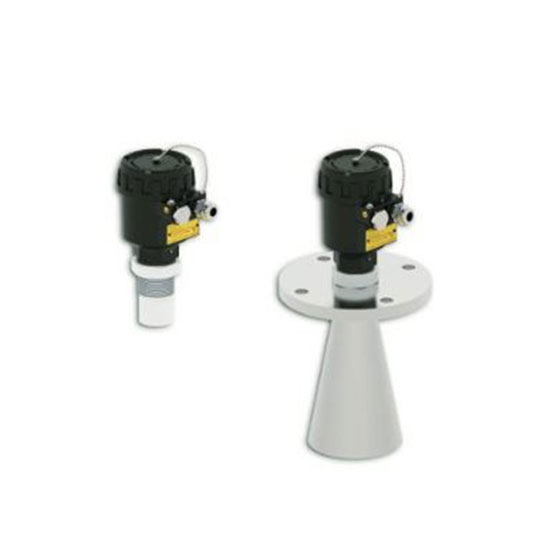
Radar-based level measurement is a highly reliable, non-contact sensing technology that determines the distance to a liquid or solid medium by emitting high-frequency electromagnetic waves, typically in the microwave spectrum. These signals travel at the speed of light, reflect off the surface of the material, and return to the sensor, where the device calculates the level based on the “time-of-flight” or frequency shift of the returned echo. Because radar waves do not require a physical medium to travel and are largely unaffected by changes in temperature, pressure, dust, or vapor, this method is ideal for demanding industrial environments where accuracy and low maintenance are critical priorities.
Working Principles
Radar-based level measurement operates using the Time-of-Flight (ToF) principle, where a sensor emits high-frequency electromagnetic pulses, typically in the microwave range, toward a target material. These waves travel at the speed of light, reflect off the surface of the medium due to a change in the dielectric constant, and return to the receiver. The sensor then calculates the distance by measuring the precise time interval between the emission and the reception of the signal, or in the case of Frequency Modulated Continuous Wave (FMCW), by analyzing the frequency shift between the transmitted and received signals. Since this method is non-contact and electromagnetic waves are largely immune to fluctuations in temperature, pressure, or heavy dust, it provides an exceptionally stable and accurate measurement for both liquids and solids in complex industrial storage systems.
Applications
Radar-based level measurement is valued across various industries for its ability to provide precise data in environments that would compromise other sensing technologies. Its non-contact nature makes it particularly useful for the following applications:
- Chemical & Petrochemical Processing
- Water & Wastewater Management
- Food & Beverage Production
- Mining & Aggregates
- Pharmaceutical Industry
- Oil & Gas Refining

EGW Non-Contact Radar Level Transmitter 26GHz
In stock
SKU:
ELW 26GHz
Achieve rock-solid reliability in your continuous level monitoring applications without standard process interference. Heavy-duty industrial plants deploy the Ensim ELW 26GHz series to capture consistent, highly accurate volume data across aggressive liquids, process sludges, and bulk materials. Because this versatile transmitter utilizes a powerful 26GHz microwave pulse, it seamlessly pierces through light foam, steam, and heavy dust layers. Consequently, your facility maintains continuous inventory visibility while entirely eliminating physical sensor wear and tear.

ELW Guided Wave Radar Level Transmitter
In stock
SKU:
EGW
Achieve absolute precision in your continuous level measurement operations regardless of tank conditions. Industrial automation plants deploy the Ensim ELW series to obtain uninterrupted, highly accurate data across turbulent liquids, aggressive chemicals, and fine bulk solids. Because this advanced transmitter guides high-frequency radar pulses directly along a physical probe, it entirely bypasses the measurement errors caused by heavy foam, dense steam, or varying dielectric environments. Consequently, your processing line operates with exceptional stability, maximizing material control and preventing costly operational downtime.

ELW Non-Contact Radar Level Transmitter 80GHz
In stock
SKU:
ELW 80GHz
Achieve absolute precision in your continuous level measurement operations without ever touching the process medium. Heavy-duty industrial plants deploy the Ensim ELW 8000 series to obtain uninterrupted, millimeter-accurate data across narrow vessels, aggressive chemicals, and challenging storage applications. Because this advanced transmitter utilizes an ultra-focused 77–81 GHz high-frequency radar beam, it completely avoids measurement errors caused by internal tank obstructions, dense steam, surface foam, or condensation. Consequently, your processing line runs with maximum efficiency while reducing maintenance overhead to zero.